Archive for the “Literature” Category


Ruth Wajnryb writes on something that concerns us all in the publishing world: book titles. We don’t agonize and argue over them for nothing: her essay from You Know What I Mean? shows the length to which titles influence her and the neighborhood around her favorite local bookstore. A linguist as well as a columnist, Ruth is always happy to dissect the words at work in a good title.


As a side note, the Book Design Review just posted its favorite book cover designs of 2008.

My local second-hand bookstore, Books On Bronte (referring to the Sydney suburb not the writers), takes full advantage of its large front window. A rapid turnaround of titles makes for pleasant gazing on my morning or evening walks with the dog. Indeed, she has learned to stop and sit patiently while I peer at the display. A recent example – there one morning, gone that evening – was How to Succeed in Business Without a Penis. The owner of the bookstore told me later that it was in the window barely a nanosecond before it was spied and snapped up.

Read the rest of this entry »

Share/Save/Bookmark

Tags: , ,

Comments No Comments »

Ruth Wajnryb is WORDS columnist for the Sydney Morning Herald. Her new book, You Know What I Mean? plumbs the depths of language, and the shifty, slippery meanings of our words. Here, a meditation on her own first name.

Although you probably have less reason than some to look up ‘ruth’ in the dictionary, doing so can be a learning experience.

You’ll find it is an archaic common noun meaning ‘pity’, ‘mercy’ or ‘compassion’. It derives from the Middle English ‘rue’ (pity), which we still use for the odd curse, as in ‘you’ll rue the day you were born’. Granted, this is not heard a lot these days, probably because in a comparable circumstance we’re more likely to pull out a handgun than invoke the powers of a curse.

These days ‘ruth’ is mostly recognisable in ‘ruthless’. It’s rather sad, don’t you think, to be present only through negation? It wasn’t always so. Remember Biblical Ruth? She who worked the fields by day and spent nights sleeping at the foot of Boaz’s bed, waiting for him to make a move. Which he did, though not before she’d got through a lot of wheat. That story, told to me as a child, has left me grudgingly respectful of the unrapacious Boaz, guided as he was by ethics rather than opportunism.

Now, you will no doubt have noticed my ‘unrapacious’. There’s no such word, of course, but my meaning is pretty transparent, I bet. After all, rapacious is a hit-you-in-the-eye kind of word, and ‘un’ is the conventional semantic reverser. You don’t need a huge imaginative leap to place Boaz closer to the ‘New Man’ end, rather than the Genghis Khan end, of the pillaging and rampaging barometer.

As a reverse marker, ‘un’ is less than totally dependable. We can use it to reverse ‘happy’, ‘cooperative’, ‘lucky’, ‘sure’ and ‘realistic’ (among many more), but not ‘sad’, ‘solemn’, ‘serious’ and ‘savage’ (among others).

Read the rest of this entry »

Share/Save/Bookmark

Tags: , , ,

Comments No Comments »

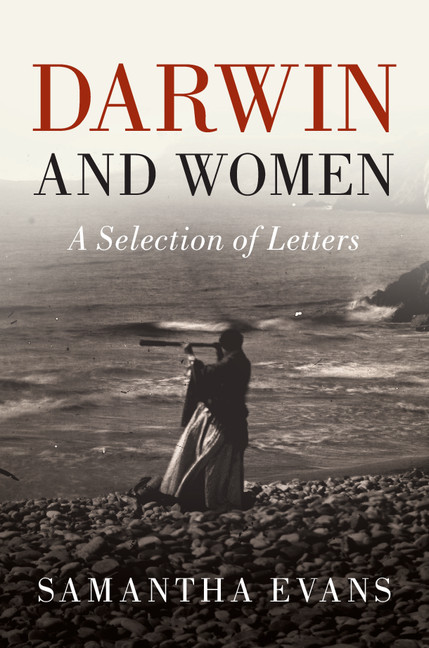
The writer’s life hasn’t changed much.

Move to the big city, live in a tiny apartment, and get dragged down by all the distractions and frustrations that accompany this process.

When I moved to New York, I had the same demoralizing situation; jobless for several months; interning for free.

So I can relate to Darwin’s buddy from Cambridge, Henry Matthew. Henry was president of the Cambridge Union. The guy had some serious brains. But when he went to London to make it as a writer, things didn’t quite work out, and Darwin had to send him a little cash at one point. His drinking and persistent letters from his wife didn’t help.

Read the rest of this entry »

Share/Save/Bookmark

Tags: ,

Comments No Comments »

The Odysseus Unbound saga continues

Where is the Ithaca of Homer, home to Odysseus? This has been a point of contention, since today’s Ithaki bears little resemblance to Homer’s description of the island.

Enter Robert Bittlestone. He has signed up as project sponsor for a company that specializes in seismic detection, sonograms and the like, bringing with him Professor John Underhill (Edinburgh, geology) and Professor James Diggle (Cambridge, classics). His work stresses visualization of data — what better tools to discover an island matching Homer’s description!

I can’t really do justice to the breadth of work being done on this — have a look at CNN’s recent report:

Read the rest of this entry »

Share/Save/Bookmark

Tags: , , , ,

Comments No Comments »

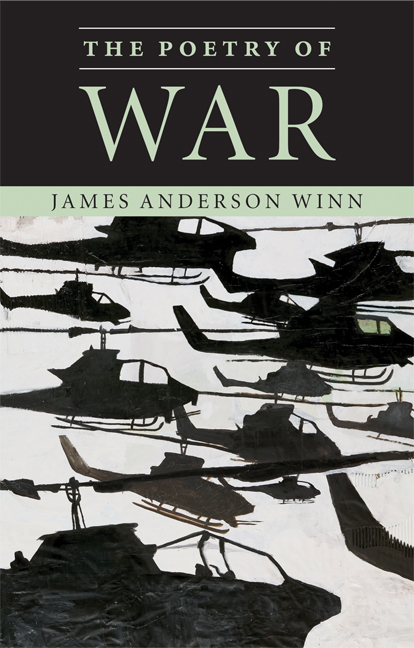
James Winn’s article on the Five Best works of war poetry in honor of Memorial Day

As printed in the Wall Street Journal, May 24, 2008

1. The Iliad Translated by Robert Fagles. Viking, 1990.

For sheer, unblinking realism, no war poem can surpass Homer’s “Iliad.” When a man is “skewered . . . straight through the mouth,” Homer unsparingly describes “teeth shattered out . . . both nostrils spurting, / mouth gaping, blowing convulsive sprays of blood.” Homer’s brutal honesty about warfare is apparent not only in these physical details but also in his treatment of the elaborate code of conduct that ancient Greek culture built upon the power of shame. “The Iliad” reveals the rules of that system and exposes its limitations. As Homer shows, the fear of being ridiculed or dishonored lurks beneath our clichés about glory and honor. Princeton classics professor Robert Fagles, who died on March 26, gave us an “Iliad” that comes close to capturing the speed, intensity and stark horror of the Greek original.

2. The Complete Barrack-Room Ballads By Rudyard Kipling. Methuen, 1973

Rudyard Kipling’s poems on warfare, once widely memorized, are easy to dismiss as imperialist but remain valuable for capturing the actual experience of the enlisted man. His soldier-narrators, despite their racist vocabulary, often express respect and affection for their foes. In “Fuzzy-Wuzzy,” for example, the narrator calls his Sudanese opponent a “big black boundin’ beggar” but salutes him as “a first-class fightin’ man.” In “Gunga Din,” the similar narrator admits that a native water-carrier is “a better man than I am.” The ballads, first published in 1892 and 1896, appear in this edition with a selection of Kipling’s chastened, bitter “Epitaphs” on World War I, in which he lost his only son.

Read the rest of this entry »

Share/Save/Bookmark

Tags: ,

Comments No Comments »