How did Polynesians and other Pacific Islanders interact verbally with Europeans during early colonial times? In turn, how did Cook and those who followed in his footsteps talk with Islanders on their explorations of the eastern Pacific? Answers to these questions emerge from my book Language Contact in the Colonial Pacific (2014) for an interdisciplinary […]
Read MoreMy book, Wilhelm von Humboldt and Early American Linguistics, addresses an audience of interested scholars and potential readers with the following concentrations: My book may also be of interest to a broader audience wishing to learn about the intricacies of nineteenth-century comparative studies in linguistics, the social sciences, and other disciplines, foremost natural history. In […]
Read MoreImagine waking up in the morning. You read your emails with the morning coffee and use Gmail’s autocomplete feature to compile the answers. Before leaving the house, you ask Siri for the weather forecast, to decide whether you need to bring your jacket. Later in the day, you interact with a customer service chatbot about […]
Read MoreNebulae are those star nurseries familiar through the fabulous Hubble images like the one above. Languages are also born – indeed every language is reborn, quite literally in the nursery. In my new book The Interaction Engine, just like the astronomers I turn the focus not onto language itself but onto the systems that gave […]
Read MoreThis book has been fun and also somewhat liberating to write. To explain this we have to tell the story of how the book came about. We are all corpus linguists, i.e. we use specialist software to study the use of language in very large datasets, or corpora. Over time, we all developed an interest […]
Read MoreLanguages appear to us as self-evident truths in the world. Until recently, the definition of what is a language seemed to be relatively straightforward: a language is what people from the same culture, living in the same territory, use to communicate with each other. We find its rules documented in dictionaries and grammar books. In […]
Read MoreDuring the 2022 Oscars ceremony, actor Will Smith famously walked onto the stage and slapped presenter Chris Rock across the face, in response to a joke about the former’s wife. Pictures of the slap soon went viral and entered meme lore, with people online adding textual labels onto the two main dramatis personae. One such […]
Read MoreEsperanto, Klingon, Na’vi … these are examples of invented or constructed languages (conlangs for short). Unlike ‘natural’ languages such as English, Swahili, or Navajo, which arise and change organically, conlangs are consciously created; Esperanto by Ludwik L. Zamenhof, Klingon by Marc Okrand, Na’vi by Paul Frommer. Like natural languages, many conlangs boast rich vocabularies in […]
Read MoreHow did Polynesians and other Pacific Islanders interact verbally with Europeans during early colonial times? In turn, how did Cook and those who followed in his footsteps talk with Islanders on their explorations of the eastern Pacific? Answers to these questions emerge from my book Language Contact in the Colonial Pacific (2014) for an interdisciplinary […]
Read MoreMy book, Wilhelm von Humboldt and Early American Linguistics, addresses an audience of interested scholars and potential readers with the following concentrations: My book may also be of interest to a broader audience wishing to learn about the intricacies of nineteenth-century comparative studies in linguistics, the social sciences, and other disciplines, foremost natural history. In […]
Read MoreImagine waking up in the morning. You read your emails with the morning coffee and use Gmail’s autocomplete feature to compile the answers. Before leaving the house, you ask Siri for the weather forecast, to decide whether you need to bring your jacket. Later in the day, you interact with a customer service chatbot about […]
Read MoreNebulae are those star nurseries familiar through the fabulous Hubble images like the one above. Languages are also born – indeed every language is reborn, quite literally in the nursery. In my new book The Interaction Engine, just like the astronomers I turn the focus not onto language itself but onto the systems that gave […]
Read MoreThis book has been fun and also somewhat liberating to write. To explain this we have to tell the story of how the book came about. We are all corpus linguists, i.e. we use specialist software to study the use of language in very large datasets, or corpora. Over time, we all developed an interest […]
Read MoreLanguages appear to us as self-evident truths in the world. Until recently, the definition of what is a language seemed to be relatively straightforward: a language is what people from the same culture, living in the same territory, use to communicate with each other. We find its rules documented in dictionaries and grammar books. In […]
Read MoreDuring the 2022 Oscars ceremony, actor Will Smith famously walked onto the stage and slapped presenter Chris Rock across the face, in response to a joke about the former’s wife. Pictures of the slap soon went viral and entered meme lore, with people online adding textual labels onto the two main dramatis personae. One such […]
Read MoreEsperanto, Klingon, Na’vi … these are examples of invented or constructed languages (conlangs for short). Unlike ‘natural’ languages such as English, Swahili, or Navajo, which arise and change organically, conlangs are consciously created; Esperanto by Ludwik L. Zamenhof, Klingon by Marc Okrand, Na’vi by Paul Frommer. Like natural languages, many conlangs boast rich vocabularies in […]
Read MoreKeep up with the latest from Cambridge University Press on our social media accounts.
University of British Columbia, Vancouver
N David Mermin, Author of \\\'Why Quark Rhymes with Pork\\\'
Speaking Shakespeare Today
The Reader\\\\\\\\\\\\\\\'s Brain
Emotive Language in Argumentation
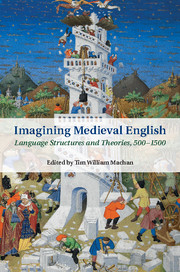
Imagining Medieval English
Language and the Law
David R. Olsen is University Professor Emeritus at the University of Toronto and the author of The Mind on Paper.

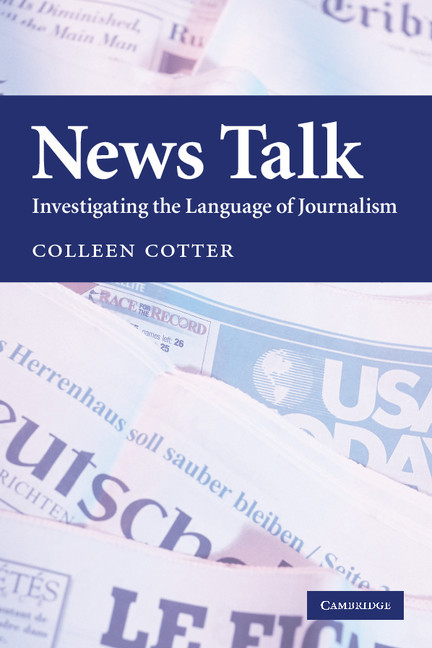
News Talk: Investigating the Language of Journalism
Words at Work and Play
Magistracy and the Historiography of the Roman Republic
The Cambridge Handbook of Stylistics
A Reference Grammar of French
Early Social Interaction
The Hammer of Witches
To receive updates on Language & Linguistics news from Cambridge University Press and Fifteen Eighty Four, please join our email list below. We will not disclose your email address to any third party