
Products and services

With After Obama: Renewing American Leadership, Restoring Global Order , Robert S. Singh argues that the US influence has weakened and contributed to the erosion of the world America made, endangering...
Renowned psychiatrist Stephen M. Stahl answers the question so many have been wondering.
Choosing a platform to use for integrating Internet tools into educational settings can be a difficult and complex task involving consideration and balancing of a number of competing factors. Is the goal...
Cambridge author Inez De Florio discusses teacher autonomy in relation to her new book Effective Teaching and Successful Learning.
In honor of the 400th Anniversary of William Shakespeare’s death this past April, we devoted the entire month to the Bard, featuring a different Shakespeare-themed blogpost, interview, competition or...
Three Cambridge University Press authors and leading experts on Intelligence take on our virtual roundtable on 'Human Intelligence'. In the Final week of the six part series asks the question 'What does the future hold in the research of intelligence? How much smarter will we be in 100 years’ time?'
The Jewish philosopher Leo Strauss held that the Hebrew Bible should be regarded as being in “radical opposition” to philosophy and as its “antagonist.” This is an influential view, which has...
David Staines, author of The Cambridge Companion to Alice Munro, sheds light on how the Nobel Prize winner views her work
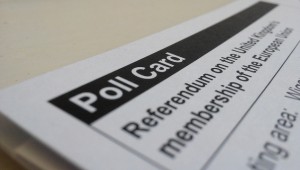
Vivien A. Schmidt, co-edtior of Resilient Liberalism in Europe's Political Economy, examines one of the motivators behind the Brexit camp: neoliberalism.
Christian Djeffal explores how international treaties be interpreted over time and offers fresh insights on this age-old question.
With immigration at the forefront of this year’s US Presidential Election, and a decision from the Supreme Court on United States v. Texas expected at the end of June, we asked some of our authors to...
Three Cambridge University Press authors and leading experts on Intelligence take on our virtual roundtable on 'Human Intelligence'. In week 5 of the six part series asks the question How can current research inform the development of new methods to assess intelligence?
Keep up with the latest from Cambridge University Press on our social media accounts.